_edited.jpg)

The Joy of Movement
Updated: Aug 17

My wake-up call was the day I had to ask my son to carry the vacuum cleaner up the stairs for me. I had known for a while that my physical ability was deteriorating, yet I didn’t have time to exercise. There weren’t enough hours in the day as it was. But, that was the day I realized I had to get intentional about my fitness.
Although I loved aerobic dance in my twenties, my fifty-eight year old body wasn’t up to the challenge. So, I opted for online yoga classes that I could practice at home before I got dressed for work in the morning.
In the beginning, I lacked the strength and balance required for some of the poses. There were mornings that I felt like a giant jellybean rolling around on my yoga mat. Yet, I managed to stick with it because the slow breathing and gentle stretching felt so good.
Benefits of Movement
We all know that exercise is good for us. Regular physical activity provides multiple benefits:
Reduces risk for chronic diseases such as heart disease, Alzheimer’s, cancer, and Type 2 diabetes;
Lowers resting heart rate, cholesterol levels, and blood pressure;
Enables optimal weight management;
Supports brain health, mood, and cognition;
Improves sleep;
Strengthens bones and muscles; and
Improves balance and flexibility.
The good news is that these benefits show up as soon as you start and increase over time.
Tips to Get Moving
Know Your Why: Getting started is the toughest hurdle. Change happens when the perceived pain of staying as we are outweighs the perceived pain of doing things differently.
Just knowing something is good for us may not be enough to keep us going when setbacks occur. On the other hand, strong internal motivation is the wind beneath our wings when we feel tempted to give up.
In my case, it was the loss of independence that got me moving. Once I finally got started, however, it was easier to keep going.
Choose Something Fun: Begin by selecting an activity that you enjoy and complements your current fitness level. I've provided some suggestions below, as well as links to FREE online classes from my favorite instructors.
Although the latest government guidelines recommend a combination of cardio and strength training, I started with one activity--yoga--and added aerobic and strength training over time.

Start Slow: If you are new to exercise, listen to your body and pace yourself to avoid over training.
Although 150 minutes of moderate-intensity physical activity a week is recommended, this should not be your goal when starting out. Remember that any physical activity is better than no activity.
In the beginning, my yoga practice only lasted 10 minutes. Over time I gradually increased the duration. By going slowly, I avoided injuries that could have derailed my efforts.
Gym Optional: You don't need to fork out money for a gym membership. Jimmy created a home gym with second-hand equipment he bought online.
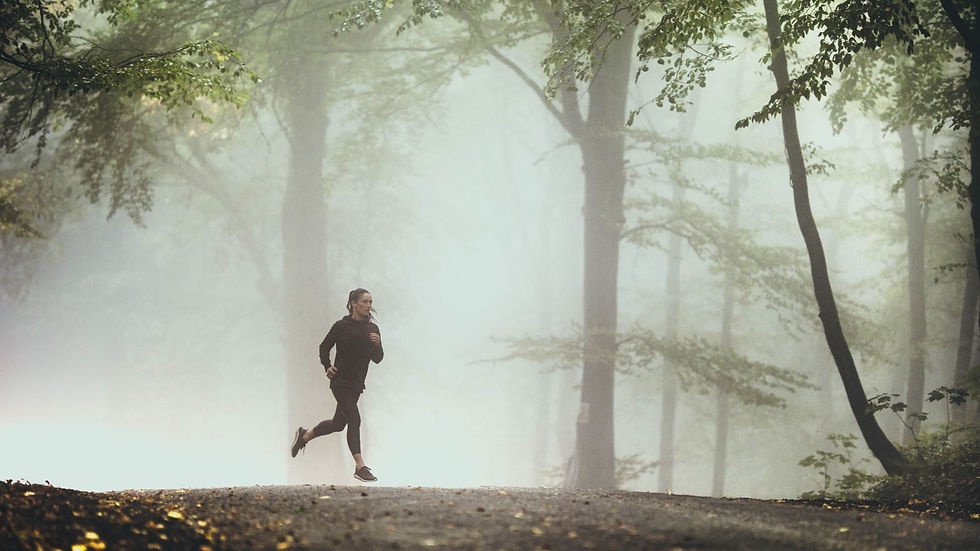
As a marathon runner, Nancy exercises outdoors with the added benefit of fresh air and time in nature.
Although I used to belong to a gym, now I love the flexibility of pre-recorded workouts I can stream at home. Regardless of my schedule, I can exercise whenever I want.
Make it a Habit: Exercise becomes a habit when you integrate it into your existing routine. Link your workout to an activity that you already do every day.
Initially, I tried exercising after work but too often I was exhausted by the end of the day. Eventually, I discovered that practicing yoga before getting dressed in the morning worked best for me.
Once something becomes part of our routine, we do it on autopilot. There are plenty of mornings my mind whines, “I don’t feel like practicing yoga today,” but my body rolls out the mat automatically.
Find a Partner: As any professional athlete will attest, working with a coach can yield better results than training solo. When Nancy decided to add weight-lifting to her marathon training, she partnered with a fitness trainer at the local gym. Lis' coach is a competitive bodybuilder who offers distance coaching online.
Anita takes daily walks with her neighbor. Having an accountability partner gets her out the door on days she feels tempted to stay home.
Keep Track: You may have heard the expression “energy flows where attention goes.” Whether your goal is to lose weight or build strength, setting a specific target, and tracking your progress is critical. Lis tracks her workouts so her coach can adjust her training plan.
My fitness tracker helps me maintain a moderate intensity during aerobic activity. It also logs activities like toting groceries that contribute to my weekly cardio goal.

Activities to Try
Here’s a list of activities that are good for beginners, as well as experienced exercisers. You can increase the challenge level as your strength and stamina improve.
There are countless exercise classes available on YouTube for free. I've included links to free classes from my favorite instructors.
Walking
Walking requires no special equipment, or gym membership and odds are you already know how to do it. The benefits of are widely accepted, A Harvard study involving 12,000 participants concluded that walking for an hour a day reduced the effects of 32 obesity-promoting genes by 50%. Walking can reduce arthritis by lubricating joints and strengthening the surrounding muscles. Gentle walking after a meal can reduce glucose spikes.
Qigong
Developed in China over four thousand years ago, qigong links movement to the breath. As in yoga, a pose starts with an inhale before flowing to the next position on an exhale.
More than just an exercise, qigong is a form of energy medicine similar to healing therapies such as reiki, acupuncture, and Healing Touch (the modality I am trained in).
According to the National Center for Complementary and Integrative Health (NCCIH) conditions that appear to improve with a regular qigong practice include blood pressure, chronic heart failure, Chronic Obstructive Pulmonary Disease (COPD), knee pain, cognition, cancer, substance abuse, balance, Parkinson’s disease, and fibromyalgia.
30-minute qigong healing activation practice (includes 10-minute intro to qigong)
Tai Chi
Tai chi is a form of qigong. There is excellent evidence that tai chi is beneficial for depression and dementia, as well as cardiac and stroke rehabilitation, in addition to the qigong benefits listed above.
Yoga
It is believed that humans have been practicing yoga since 500 B.C. Initially a spiritual practice, contemporary yoga is viewed as exercise. All forms of yoga link movement with breath.
According to NCCIH, yoga has been demonstrated to relieve stress, improve mental health and sleep, and reduce fall risk. It may also help reduce pain in the head, neck, and knees.
The Joy of Movement
Physical activity may feel awkward and uncomfortable in the beginning, especially if you are out of shape as I was when I started.
It won’t take long to experience changes to your strength, stamina, and mood. Pay attention to how you feel and celebrate your success.
With persistence, your body will move more easily. Before you know it, exercise becomes fun. You’ll find yourself looking forward to working out because of how good you feel afterward.
It's been eight years since my wake-up call. I start every day with 30 minutes of movement alternating between yoga, cardio, and strength training with free weights.
I love how I feel in my body now. It’s easy for me to squat down, get up from the floor, and even carry the vacuum cleaner up the stairs.
If you start today, by this time next week you will be fitter than you are now. Every day, every week that goes by, movement will get easier and more joyful. The rewards are worth the effort.
References
U.S. Department of Health and Human Services. “Physical Activity Guidelines for Americans, 2nd Edition.” Accessed Aug 14 2026. https://odphp.health.gov/sites/default/files/2019-09/Physical_Activity_Guidelines_2nd_edition.pdf
Pitts, Carolyn. "Eight Intentions for Self-Healing." Intend Well LLC. Aug 15 2025. https://www.carolynpitts.com/eightintentions

My book, Eight Intentions for Self-Healing, shows you how to use the power of intention to reclaim your personal power to heal. Filled with practical techniques, insightful exercises, and self-assessments, your healing journey starts here.
NEW Journal Designs Available

Last month we explored the health benefits of a journaling practice. I'm pleased to share that I have new journal designs featuring my original artwork. All journals are 6 x 9 inches, 120 lined pages, for $6.99.


Comments