_edited.jpg)

Confessions of a Ch’egan: Why Eating Chicken Made My Vegan Friend Feel Better
Updated: Apr 29

“I guess I’m a ch’egan,” laughed my friend Elaine.
She had followed a vegan diet for years but recently began eating chicken again. Within weeks, she felt better. More energy. More satisfied. Like something her body had been quietly asking for had finally arrived.
So why did eating chicken make Elaine feel better? The reason is something everyone—even meat eaters—should know.
First, What Do We Mean by “Vegan”?
Vegans avoid all animal products—meat, fish, dairy, eggs, and even honey. Some people also extend veganism beyond food by avoiding leather, wool, silk, and animal-tested products.
Many people choose a vegan diet for one (or more) of three reasons:
Animal welfare
Environmental impact
Personal health
Potato chips and Oreo cookies are technically vegan, despite the high saturated fat, salt, and sugar content. A truly health-focused approach is often called a whole-food plant-based (WFPB) diet, centered on whole or minimally processed foods rich in fiber and low in added sugar and saturated fat.
Since “whole-food plant-based” is a mouthful (plus I never consume meat, dairy or eggs), I find it easier to say I’m vegan.
When done well, a vegan diet can be incredibly healthy.
A less intentional approach, however, may result in nutritional gaps.
Which brings us back to Elaine.
Did Chicken Fill a Gap?
Perhaps chicken filled a nutritional gap in Elaine’s vegan choices. During my Plant-Based Coaching certification training, I learned that several nutrients deserve special attention in a plant-based diet.
Let’s explore the primary ones.
Vitamin B-12 — The Big One
Vitamin B-12 supports:
red blood cell production
heart and immune health
mood and brain function
B-12 is produced by bacteria in soil. Historically, humans consumed small amounts naturally through unprocessed food and water. Modern sanitation and farming practices have dramatically reduced that exposure.
Today, many people get B-12 from animal products. Some of the B-12 in animal products results from their exposure to soil, in addition to nutrients added to their feed.
But, it may not be enough. In fact, nearly 40% of Americans may have low B-12 levels, including meat-eaters.
The recommended intake is 2.4 mcg daily for adults. Many experts suggest supplementation, especially for older adults or those with digestive issues that may impair absorption.
(For what it’s worth, my own lab work shows healthy B-12 levels after 15+ years meat-free—thanks to supplementation.)
Vitamin D-3 — The Sunshine Vitamin
Vitamin D-3 supports:
bone and muscle health
immune function
calcium absorption
Sunlight helps our bodies make vitamin D, but many people don’t get enough. Dietary sources are limited, so fortified foods or supplements are common for both vegans and omnivores.
Because D is fat-soluble, it’s possible to take too much. Discuss your supplementation needs with your healthcare provider.
Omega-3 Fatty Acids — Brain and Heart Support
Omega-3s help support:
heart health
brain function
mood balance
inflammation regulation
Plant sources include:
flaxseeds
chia seeds
hemp seeds
walnuts
algae and seaweed
These staples live permanently in my kitchen! I add hemp seed and ground flaxseed to smoothies, and make tasty chia seed pudding with plant milk and fruit. I keep walnuts in the freezer to sprinkle on oatmeal and salads.
Vitamin K and Zinc — Often Overlooked
Vitamin K
Supports blood clotting, bone health, and possibly brain health.
Found in leafy greens, cruciferous vegetables, and fermented foods.
Zinc
Essential for immunity, hormone balance, and healing.
Found in legumes, nuts, seeds, whole grains, tofu, and tempeh.
“This Sounds Complicated…”
If this feels overwhelming, you’re not alone.
Many vegans simplify things by using a high-quality supplement designed specifically for plant-based diets. I recommend choosing a product that is third-party tested to ensure that the active ingredients match the list on the label.
And here’s an important reminder:
Nutrient deficiencies are not exclusive to vegans. Many omnivores are low in B-12, vitamin D, and omega-3s as well.
Every diet benefits from intentional scrutiny.
Curious About Trying More Plant-Based Meals?
You don’t have to become vegan overnight to benefit from plant-based eating.
A gentle approach works beautifully:
Try one or two meatless days per week
Experiment with new plant foods (my favorites include tofu, tempeh, farro)
Find plant-based versions of your favorite dishes
Eat a wide variety of fruits, vegetables, legumes, nuts, and seeds
Limit ultra-processed “vegan junk food”
Pay attention to key nutrients—especially B-12
Small steps add up.
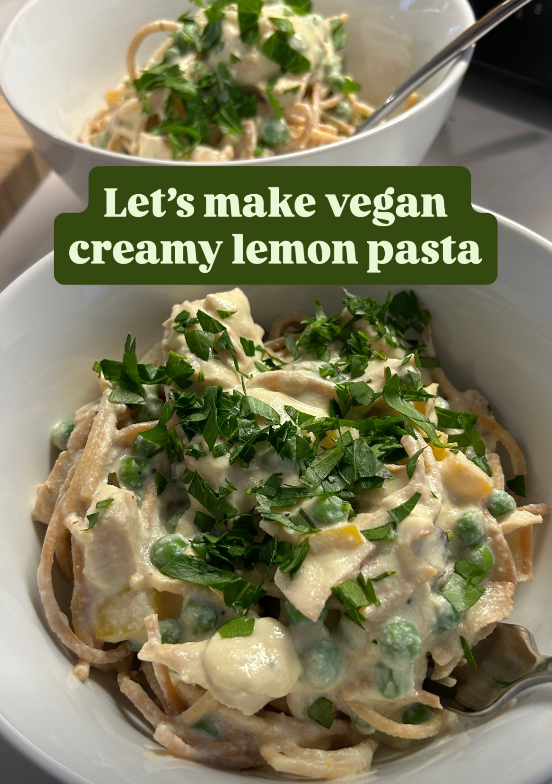
Get started with this easy, delicious recipe for creamy lemon pasta with "chicken" from Veg Fit Life.
The Growing Popularity of Plant-Based Eating
You might be wondering whether Elaine's experience shows that meat is a critical component of a well-rounded diet. After all, didn't our ancestors eat meat?
Before the days of refrigeration, people consumed meat less often and in smaller portions. For your great-grandparents, chicken may have been a special treat reserved for Sunday dinner. According to data from the USDA, American's consumption of poultry increased more than 400% between the years 1800 and 2000.
Research continues to link plant-forward diets with lower risk of:
heart disease
type 2 diabetes
obesity
certain cancers
Plants are rich in antioxidants, and phytochemicals that support immune health and reduce inflammation.
Fiber—found only in plant foods—nourishes the gut microbiome—which protects our emotional health through the gut-brain connection. Dysbiosis (microbial imbalance in the digestive system), has been linked to depression.
In short: adding more plants to your plate is one of the most powerful health upgrades available.

References
"What's Cooking? How to eat more plant-based meals." https://www.carolynpitts.com/post/plant-based-recipes
"The Nutritional Benefits of Tofu." https://www.carolynpitts.com/post/nutritional-benefits-of-tofu
"Tempeh: a high-fiber protein powerhouse." https://www.carolynpitts.com/post/a-high-fiber-protein-powerhouse
"Get Your Nooch On. the health benefits of nutritional yeast." https://www.carolynpitts.com/post/get-your-nooch-on-the-health-benefits-of-nutritional-yeast
Oberst, Lindsay. “5 Key Supplements for Vegans and Vegetarians to Thrive on a Plant-based Diet.” Dec 2017. https://foodrevolution.org/blog/supplements-vegetarians-vegans-plant-based/
Landry MJ, Ward CP. Health Benefits of a Plant-Based Dietary Pattern and Implementation in Healthcare and Clinical Practice. Am J Lifestyle Med. 2024 Mar 14;18(5):657-665. doi: 10.1177/15598276241237766
Tuso PJ, Ismail MH, Ha BP, Bartolotto C. Nutritional update for physicians: plant-based diets. Perm J. 2013 Spring;17(2):61-6. doi: 10.7812/TPP/12-085
"Health Benefits of a Plant-Based Diet.” Scripps Health. Aug 4 2025. https://www.youtube.com/watch?v=oG2mBwzFvnE
“The Benefits of a Plant-based Diet.” UT MD Anderson. Oct 22, 2025. https://www.mdanderson.org/cancerwise/the-benefits-of-a-plant-based-diet.h00-159780390.html
Lee, Joyce H et al. “United States Dietary Trends Since 1800: Lack of Association Between Saturated Fatty Acid Consumption and Non-communicable Diseases.” Frontiers in nutrition vol. 8 748847. 13 Jan. 2022, doi:10.3389/fnut.2021.748847
Bibolar, Anca C et al. “Gut Feelings: Linking Dysbiosis to Depression-A Narrative Literature Review.” Medicina (Kaunas, Lithuania) vol. 61,8 1360. 27 Jul. 2025, doi:10.3390/medicina61081360
“Chicken is not a healthy choice.” Physicians Committee for Responsible Medicine. Accessed April 27, 2026. https://www.pcrm.org/good-nutrition/nutrition-information/chicken#:~:text=Chicken
Aziz M, Park DE, Quinlivan V, et al.. "Zoonotic Escherichia coli and urinary tract infections in Southern California." MBio. 2025;0:e01428-25. doi.org/10.1128/mbio.01428-25


Comments